
Are Website Builders Right for Small Businesses in Ireland?
Updated for 2026 · 5-minute read
ebsite builders can be a practical solution for some small businesses in Ireland, but they are not suitable for everyone. They work best for simple websites with limited needs and become restrictive as a business grows or requires flexibility, ownership, and long-term control. Choosing a website builder should be a business decision, not a trend-driven one.

Are Website Builders Right for Small Businesses in Ireland?
Website builders are everywhere. They promise fast setup, low cost, and no technical knowledge. For some small businesses in Ireland, they can be a reasonable short-term solution. For others, they quietly become a source of frustration, limitation, and wasted time.
The question is not whether website builders are good or bad.
The real question is whether they are right for your business.
This article explains what website builders actually are, when they make sense, when they do not, and how to decide without being influenced by marketing claims.
What people usually mean by “website builders”
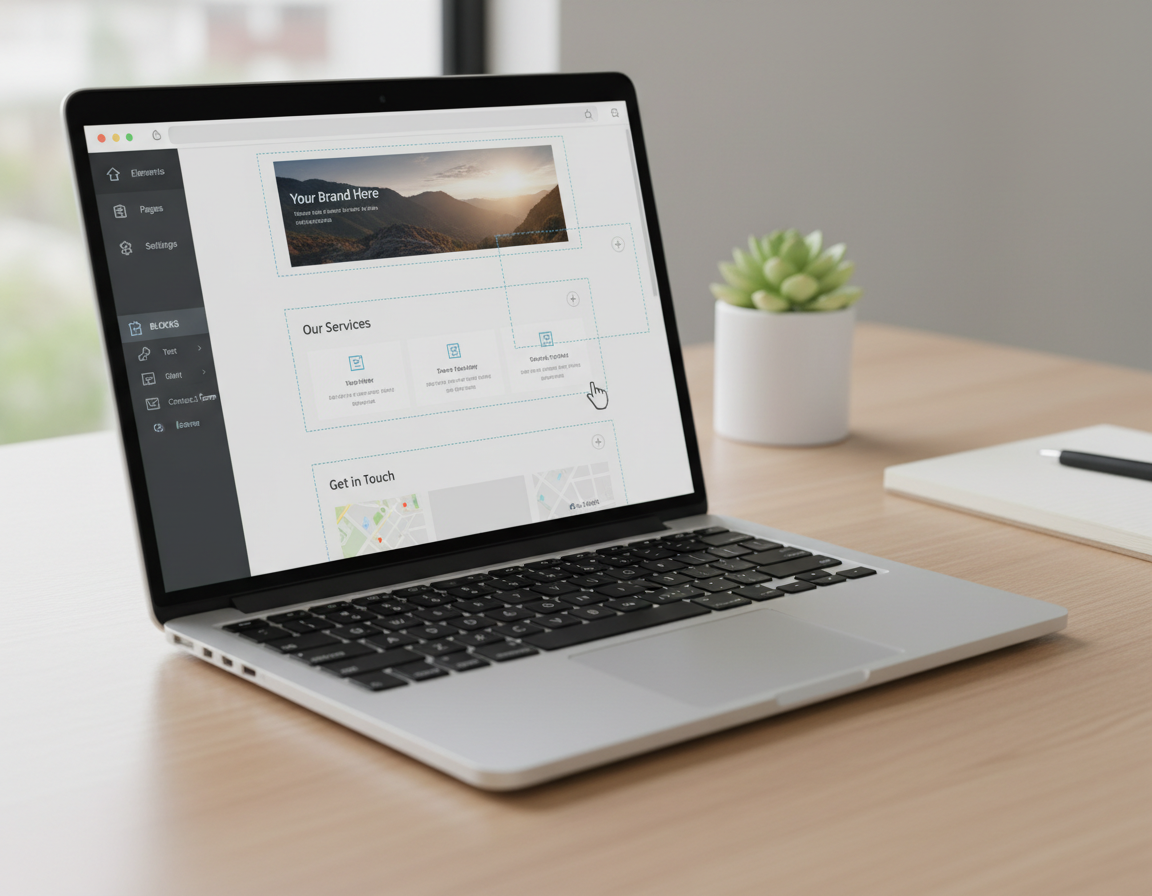
When people talk about website builders, they are usually referring to platforms that provide:
Pre-designed templates
Drag-and-drop editing
Hosting bundled into the platform
Limited technical setup
Monthly subscription pricing
The appeal is obvious. A website builder removes many early decisions and allows a site to go live quickly.
What matters is what happens after the site is live.
When website builders make sense for small businesses
Website builders can make sense when the website’s role is simple and unlikely to change.
They are often suitable if:
The business needs a basic online presence
The website has very few pages
There are no complex features or integrations
The business does not rely heavily on the website for leads or sales
Long-term flexibility is not a priority
In these cases, a website builder can be a practical and cost-effective way to get online without overthinking the process.

When website builders usually cause problems
Website builders often become a problem when a business grows or expectations increase.
Common issues appear when:
The business needs better SEO control
The website structure becomes restrictive
Design or layout flexibility is limited
Performance or speed becomes an issue
Ownership and portability matter
Many businesses do not realise they have outgrown a website builder until changes become difficult, expensive, or impossible without rebuilding the site elsewhere.
The hidden costs of website builders
Website builders are often described as “cheap” or “easy”, but the real cost is not always financial.
Hidden costs often include:
Time spent working around platform limitations
Reduced flexibility as the business evolves
Difficulty moving the site elsewhere later
Paying ongoing subscriptions indefinitely
Needing a rebuild sooner than expected
These costs do not appear on a pricing page, but they affect businesses over time.
Website builders vs long-term business needs
A useful way to think about website builders is this:
Website builders are designed for convenience, not growth.
That does not make them wrong. It simply means they are built for a specific type of use. Businesses that expect their website to support marketing, SEO, or operational growth often need more control than a builder can provide.

Who website builders are usually a good fit for
Website builders are often suitable for:
Very small or owner-operated businesses
Early-stage projects with limited scope
Businesses testing an idea before investing further
Websites that are unlikely to change much
For these cases, simplicity can be a genuine advantage.
Who website builders are usually not a good fit for
Website builders are often a poor fit for:
Growing small businesses
Businesses that rely on online enquiries
Companies that need strong SEO foundations
Businesses that want long-term ownership and flexibility
Websites expected to evolve with the business
In these cases, starting with the wrong platform can slow progress later.
A simple way to decide
A useful decision test is to ask:
Is this website meant to actively support business growth?
Will the website need to change as the business changes?
Does ownership and control matter long-term?
If the answer to these questions is yes, a website builder may be a temporary solution at best.
One-Line Boundary Statement
Website builders work best when a business needs simplicity. When flexibility and growth matter, their limits appear quickly.
Why this matters before choosing “the best website builder”
Many articles list the “best website builders for small businesses” without first helping businesses decide whether a builder is the right approach at all.
That is why this article exists.
The next step is not choosing a tool.
The next step is understanding which type of business each tool actually suits.